

Menopause & Mature Skin · Guide
Your face gets serum, SPF and attention. Your hands get dish soap and cold air. Here is why hands can start to look older after menopause, what actually helps, and what no cream can do.

The short answer
Hands often look older because they get years of sun and constant washing while the skin itself loses collagen, water and fullness.1 Menopause speeds up part of that: up to 30% of skin collagen can go in the first five years.3 Daily SPF 30, a ceramide cream on damp skin and a retinoid at bedtime can visibly improve texture and dryness.12 Lost volume and prominent veins are different: those take in-office treatment.1
01Why do my hands look so old all of a sudden?
It rarely happens overnight, though it can feel that way. One day you catch your hand on the steering wheel or in a holiday photo and it looks like your mother’s. The American Academy of Dermatology (AAD) points to a short list of causes: sun, lost collagen and elastin, drier skin and weaker nails.1 Usually several of them are going on at once.
Two more facts help explain why hands give things away. Loss of volume between the bones makes skin look crepier and the tendons stand out.9 And loss of fullness is what makes veins so visible, says the AAD.1 That is why a hand can look bonier even if your weight has not changed.
02Is it menopause or just sun damage?
Both, and they stack. Dermatology reviews describe hand aging as a mix of photoaging (spots, rough patches, damaged elastic fibers) and intrinsic aging (lost collagen and fat, weaker barrier).10 Menopause feeds the second group.
Of skin collagen can be lost in the first five years after menopause, followed by an average decline of about 2.1% per postmenopausal year over 15 years. Skin thickness can fall by as much as 1.13% a year in the early postmenopausal years.3
Those numbers come from skin research overall, not hands specifically. Still, the same loss shows on hands, on top of decades of sun. If you assumed this was just “getting older,” you have plenty of company: in a 2026 Galderma survey of 5,090 women, more than half mistook menopause-related skin changes for ordinary aging.11
03Why do my hands look worse in winter?
If your hands suddenly look older in November, the weather is part of it. A review of the research found that low humidity and low temperatures reduce skin barrier function and make skin more reactive to irritants.5 The AAD adds that cold air outside and heated air inside both dry out hands.2
Then the season piles on: more hand washing, more sanitizer and more dishes. Alcohol-based sanitizers can strip natural oils, so the AAD suggests carrying hand cream with your sanitizer and using it every time.2 Keep washing, of course. Just moisturize right after.
04Do my hands really need sunscreen every day?
Yes, and in winter too. UV rays reach your hands and can cause spots, roughness and wrinkles, so the AAD recommends a broad-spectrum, water-resistant sunscreen with SPF 30 or higher on your hands daily, all year.12 Many dermatologists also suggest a thin sun-protective glove for driving.1
Few people do this, even when they are thinking about the sun. In one study of 214 beachgoers in Texas, only about half had sunscreen on the backs of their hands, and just 13% reapplied it there.4
The easy habit: when you apply SPF to your face, wipe what is left over the backs of your hands, then put more on after you wash them.
05Can you use retinol on your hands?
You can, and this is where hand care can do more than keep skin soft. The AAD lists a retinol or glycolic acid lotion at bedtime among its options for wrinkled hands.1
The average age of 36 people who used 0.4% retinol lotion on one arm for 24 weeks, up to three times a week. Fine wrinkling improved significantly compared with the plain lotion on the other arm, and markers of collagen production rose.6
That study was on arms, not hands, and used retinol rather than retinal, so read it as a good sign rather than proof for hands. Retinal (retinaldehyde) has its own evidence: in a one-year study, a 0.05% cream increased epidermal thickness at the temple compared with an emollient.7
How to do it without irritation
- Start at two nights a week and build up only if your skin stays comfortable.
- Apply after your last hand wash, so it stays on overnight. Use what is left on your fingers after your face and neck, on the backs of your hands only.
- Follow with moisturizer, then wear SPF the next morning.
- Skip it on cracked or sore skin. Repair the barrier first.

Our pick for crepey hands
Retinal 0.2% Barrier Serum
Retinaldehyde in a barrier-supporting base, made for mature, sensitive skin. One bottle covers face, neck and the backs of your hands, for skin that looks smoother and firmer over time.
Shop Retinal 0.2%06What is the best hand cream for aging hands?
The label matters more than the word “hand” on the front. According to the AAD, look for:2
- No fragrance or dye, especially if your skin reacts easily now.
- Lipids such as ceramides, to support the barrier.
- Humectants such as glycerin, to draw in water.
- Occlusives such as petrolatum, to seal it in.
Apply while skin is still damp, after every wash. For very dry hands, the AAD suggests a night treatment: soak in warm water, apply cream or ointment, then sleep in cotton gloves with a humidifier running.2


Our pick for dry hands
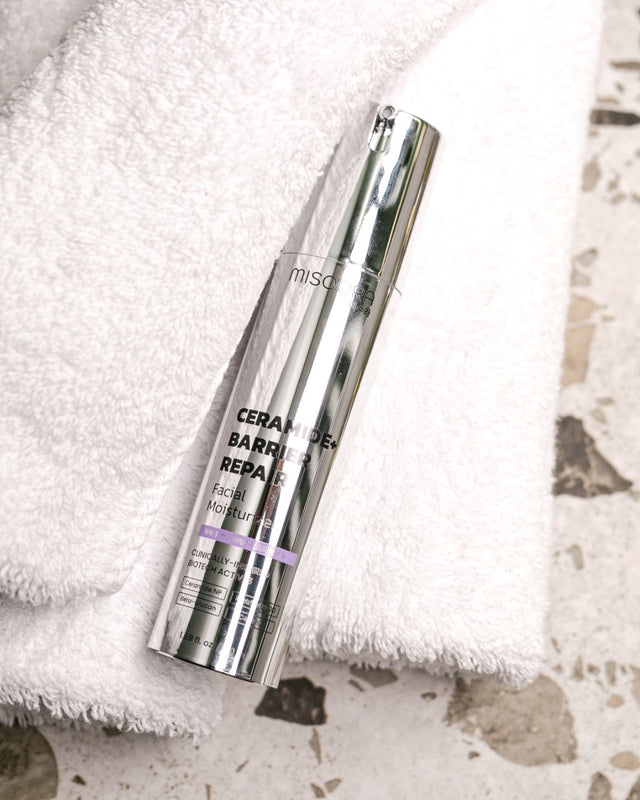
Ceramide+ Barrier Repair Moisturizer
Made for your face, and just as useful on the backs of your hands: ceramides for the barrier, with no fragrance and no ethanol. Use the last of it on your hands, morning and night.
Shop the moisturizer07Why are my nails breaking after menopause?
Brittle nails affect up to 20% of people, especially women over 50.8 In a survey of 1,457 respondents on nail changes in menopause, presented in the British Journal of Dermatology supplement in 2026, 40% reported brittle nails and 24% reported thinner nails.12 It is an early conference abstract, but it matches what many women notice.
The AAD’s advice is simple: wear gloves for cleaning and gardening, keep hands out of water where you can, and rehydrate. A dermatologist may suggest urea cream or mineral oil at bedtime, sometimes under a light cotton glove.1 Biotin and other supplements are widely sold and have been reported as useful, but evidence is limited, so check with your doctor before adding one.8
08What can a dermatologist do that a cream can’t?
Skincare works on the skin’s surface and texture. It cannot put volume back or close a vein. Here is an honest split, based on AAD guidance.1
| Concern | At home | In the office |
|---|---|---|
| Age spots | Daily SPF, lightening creams (slowest option) | Cryosurgery, laser, peels, microdermabrasion |
| Fine wrinkles, crepey look | Retinoid or glycolic acid at bedtime | Light peels every 1–3 months, laser |
| Roughness | Daily moisturizer | Mild chemical peel |
| Lost fullness | No cream restores it | Filler (the FDA has approved calcium hydroxylapatite for hands) or your own fat |
| Prominent veins | No cream changes them | Laser, sclerotherapy |
See a dermatologist about any rough, scaly patch that does not go away, or a spot that changes. Rough patches on sun-exposed hands can be actinic keratoses, which are precancerous.1
09A simple daily routine for younger-looking hands

You do not need a separate hand routine. Finish your face routine on your hands, and add a few small habits.
Get the whole routine in one box. A set takes the guesswork out of what goes on when, and the serums and moisturizer can all finish on your hands.


Key takeaways
- Hands age from sun and daily wear, plus the collagen and water skin loses over time.1
- Up to 30% of skin collagen can be lost in the first five years after menopause.3
- Cold air, heated rooms and sanitizer make hands look worse in winter.25
- Daily SPF 30, a ceramide cream on damp skin and a bedtime retinoid are the home basics.12
- Lost volume and prominent veins take in-office treatment, not a cream.1
10FAQ
Why do my hands look older than my face?
Your face usually gets sunscreen and skincare; your hands get sun, water and detergent. Add lost collagen and fullness, and hands can show age sooner.1
Can you reverse aging hands?
Not completely. Moisturizer and a retinoid can visibly improve dryness, texture and the look of fine lines. Volume loss and veins need a dermatologist.1
Can I use my face serum on my hands?
Yes, for most people. Fragrance-free face products are a sensible choice, and using what is left on your fingers costs you nothing extra. Stop if skin stings or peels.
Do hand creams with retinol work?
They can help if the formula actually stays on your skin. Since washing removes it, bedtime use makes the most sense. The AAD lists retinol at bedtime as an option for wrinkled hands.1
Will hormone therapy improve my hands?
Hormone therapy is prescribed for menopause symptoms, not for skin, and that decision belongs with your doctor. Our guide to estrogen and skin covers the evidence.
How can I fade age spots on my hands?
Start with daily sunscreen so they do not darken further. Lightening creams are the slowest and least expensive option; in-office treatments work faster.1 See our guide to dark spots after menopause.
Keep reading: Crepey skin on the neck, chest and arms · Thin skin and easy bruising after menopause
References
- American Academy of Dermatology. What can make my hands look younger?
- American Academy of Dermatology. 4 skin care tips for your hands.
- Calleja-Agius J, Muscat-Baron Y, Brincat MP. Skin ageing. Menopause International. 2007;13(2):60–64.
- Warren DB, Riahi RR, Hobbs JB, Wagner RF. Sunscreen use on the dorsal hands at the beach. Journal of Skin Cancer. 2013.
- Engebretsen KA, Johansen JD, Kezic S, Linneberg A, Thyssen JP. The effect of environmental humidity and temperature on skin barrier function and dermatitis. JEADV. 2016;30(2):223–249.
- Kafi R, Kwak HS, Schumacher WE, et al. Improvement of naturally aged skin with vitamin A (retinol). Archives of Dermatology. 2007;143(5):606–612.
- Diridollou S, et al. Efficacy of topical 0.05% retinaldehyde in skin aging by ultrasound and rheological techniques. Dermatology. 1999;199(Suppl 1):37–41.
- Chessa MA, Iorizzo M, Richert B, et al. Pathogenesis, clinical signs and treatment recommendations in brittle nails: a review. Dermatology and Therapy. 2020;10(1):15–27.
- Talakoub L, Wesley N. Hand rejuvenation. Dermatology News. 2015.
- Exploring aesthetic interventions, part X: rejuvenation options for aging hands. The Dermatologist.
- Galderma. New Galderma research reveals more than half of women mistake menopause-related skin changes for signs of ageing. Company survey of 5,090 women in the US, UK, Brazil and China.
- Meghoma L, Koulouglioti C, Llewellyn C, et al. BH27 Characterizing nail changes in menopause: symptom patterns and perceived impact. British Journal of Dermatology. 2026 (conference abstract).
Written by MISOORA Editorial. This article is for general information and is not medical advice. Talk to a dermatologist about any spot or patch that changes or does not heal. Product results are cosmetic and vary from person to person.