

Menopause & Mature Skin · Guide
A few glasses at a holiday party, and the next morning your face looks puffy, red and older than it did last week. Here is what alcohol does to skin after menopause, how much is enough to show, and how to enjoy the season without wearing it on your face.

The short answer
It can. In a survey of 3,267 women, heavy drinking, defined as 8 or more drinks a week, was linked to more forehead lines, under-eye puffiness, visible blood vessels, flatter-looking cheeks and lines at the corners of the mouth. 1 Alcohol is also a common trigger for facial redness, 4 and it breaks up sleep, 6 which is linked to a weaker skin barrier. 7 After menopause, skin already repairs itself more slowly, 10 so a busy party season can show up fast. You don't have to skip the toast. Know what a drink is, put water between glasses, stop well before bed, and never skip your evening routine.
01Does alcohol really age your skin?
The best evidence comes from a large survey of 3,267 women aged 18 to 75 in the US, Canada, the UK and Australia. Each woman rated her own face against standard photo scales for 11 signs of aging, and researchers compared the results by smoking and drinking habits, adjusting for age, body mass index, country and race. 1
Women who drank 8 or more drinks a week had more of five signs: upper facial lines, puffiness under the eyes, lines and droop at the corners of the mouth, loss of volume in the midface, and visible blood vessels. 1 The authors concluded that smoking and drinking affect the face in different ways. 1
drinks a week was the level at which drinking was linked to more lines, puffiness and visible blood vessels in women. 1
A survey like this shows a link, not proof that alcohol caused the changes. Sun exposure, genes and sleep all play a part. Still, the pattern is consistent with what many women see in the mirror after a run of late nights.
02Why does my face turn red when I drink?
Flushing after a glass of wine is common, and for some women it is more than a passing blush. The American Academy of Dermatology lists alcohol, especially red wine, among the common triggers of rosacea flare-ups. 4
Drinking may also raise the chance of developing rosacea in the first place. In the Nurses’ Health Study II, which followed 82,737 women for 14 years, rosacea risk rose with the amount of alcohol women drank. White wine and liquor showed the clearest link. 2
The AAD adds two fair caveats: more studies are needed to know whether drinking causes rosacea, and plenty of people who never drink develop it. 3 If your face stays red, or flushing lasts a long time, see a dermatologist. 3 Our guide to rosacea after menopause covers how to calm a red, reactive face.
03Why do I look puffy and tired the morning after?

Two things happen overnight, and both show on your face.
You lose fluid
Alcohol makes you urinate more and lose extra fluid, so many people wake up mildly dehydrated, thirsty and tired. 6
You sleep worse
A drink can help you fall asleep, but sleep after drinking tends to be broken up, and people wake earlier. 6 That matters for skin. In a study of 60 women, poor sleepers lost more water through the skin, and good sleepers recovered 30% more of their skin barrier 72 hours after a mild injury. 7
Puffiness under the eyes was one of the signs linked to heavy drinking in the survey above. 1 For more on this area, see our guide to under-eye bags after menopause.
04Why does alcohol hit harder after menopause?
The same glass of wine can feel different at 55 than it did at 35, and it can look different on your skin too.
- More alcohol reaches your blood. Women generally have less body water than men of the same weight, so the same drink leads to a higher blood alcohol level. 9
- It can feed hot flashes. Mayo Clinic notes that alcohol can make hot flashes and night sweats worse, and for some women it triggers them. 5 A flushed face from a hot flash and a flushed face from wine can arrive together.
- It costs you sleep you may already be missing. Alcohol disrupts sleep quality, and Mayo Clinic advises cutting back or avoiding it before bed. 5 In a 2025 survey of women aged 40 to 65, 22% of peri- and postmenopausal women named sleep problems as a reason they had cut back or stopped drinking. 11
- Skin bounces back more slowly. When researchers disrupted the outer skin barrier, it had recovered about 50% after 24 hours in people aged 20 to 30, and only about 15% in people over 80. 10 Women in their 50s were not tested, but the direction is clear: small stresses take longer to settle with age.
drink a day at most is the limit a Mayo Clinic women’s health specialist suggests during menopause, with portions measured. 5
05How much is too much for your skin?
There is no proven safe number for skin, but two benchmarks help. In the facial aging survey, the changes were linked to 8 or more drinks a week. 1 And a Mayo Clinic specialist suggests no more than one drink a day during menopause. 5 Both depend on knowing what one drink actually is.
| Drink | One standard drink | Holiday reality |
|---|---|---|
| Wine | 5 fl oz at about 12% alcohol 8 | A large pour in a big glass can be closer to two |
| Beer | 12 fl oz at about 5% alcohol 8 | A 12 oz craft beer at 10% counts as two 8 |
| Spirits | 1.5 fl oz at about 40% alcohol 8 | Mixed drinks and cocktails often hold more than one shot |
| Liqueurs | 2 to 3 fl oz at about 24% alcohol 8 | Easy to underestimate in coffee drinks and desserts |
In the US, one standard drink holds about 14 grams of pure alcohol. 8 At a party, it is easy to drink two or three without noticing, especially when someone keeps topping up your glass.
06How to enjoy the holidays and protect your skin
- Count in standard drinksDecide on your number before you arrive, and count pours, not glasses. 8 Pour your own drinks when you can, so you know what is in the glass.
- Put water between drinksAlternate each drink with water or a non-alcoholic option. The NIAAA encourages hosts to offer good alcohol-free drinks and points out that people who don’t drink have just as much fun. 9
- Choose your drink with your skin in mindIf you flush easily, red wine is a known rosacea trigger. 4 White wine and liquor showed the strongest link to developing rosacea in the large study of women. 2
- Stop well before bedAlcohol close to bedtime breaks up sleep, so finish your last drink early in the evening. 5 6
- Don’t rely on hangover fixesThe NIAAA says no hangover remedy has been shown to work, and that drinking in moderation is the only reliable way to prevent one. 6
“An IV drip or electrolyte drink will undo a big night.”
According to the NIAAA, electrolyte levels and treatments like IV drips have not been shown to track with how bad a hangover feels. Time is what helps. 6
“Clear spirits are easier on you the next day.”
Darker spirits such as bourbon tend to contain more congeners, which may worsen hangover symptoms for some people. 6 But the amount you drink matters far more than the color of the glass.
07Your skin routine for the night of and the morning after
The night of the party
- Cleanse, even if it is late. A gentle, fragrance-free cleanser takes off makeup without stripping dry skin.
- Retinal 0.2% on dry skin, if your face feels calm. If it feels hot, flushed or stings, skip it tonight.
- PDRN serum.
- Ceramide+ moisturizer, a little more than usual.
The morning after
- Splash with lukewarm water and drink a big glass of water.
- NAD+ Firming Serum.
- Ceramide+ moisturizer.
- Broad-spectrum SPF 30 or higher. 13

Don’t skip sunscreen on a ski trip or a sunny winter walk. In a small study, a dose of alcohol lowered the antioxidant levels in volunteers’ skin and made it burn from less UV light. 12

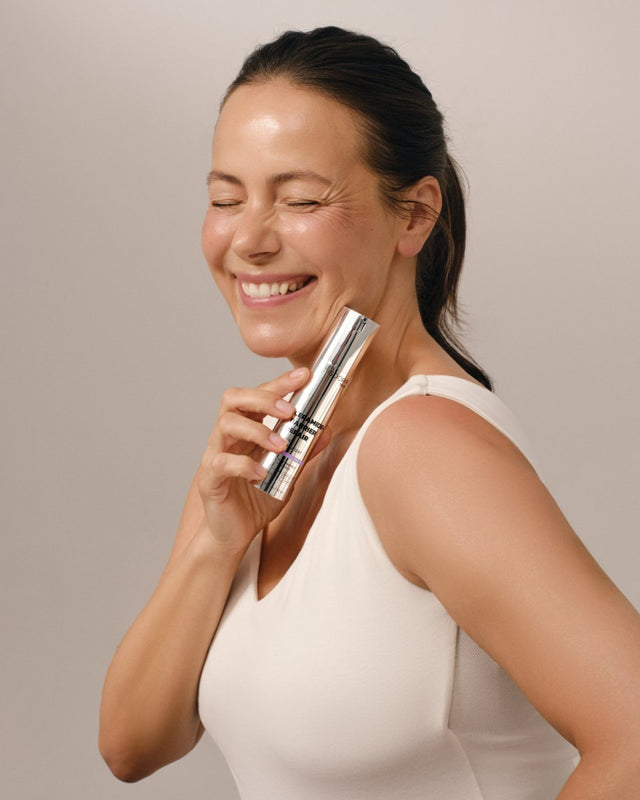
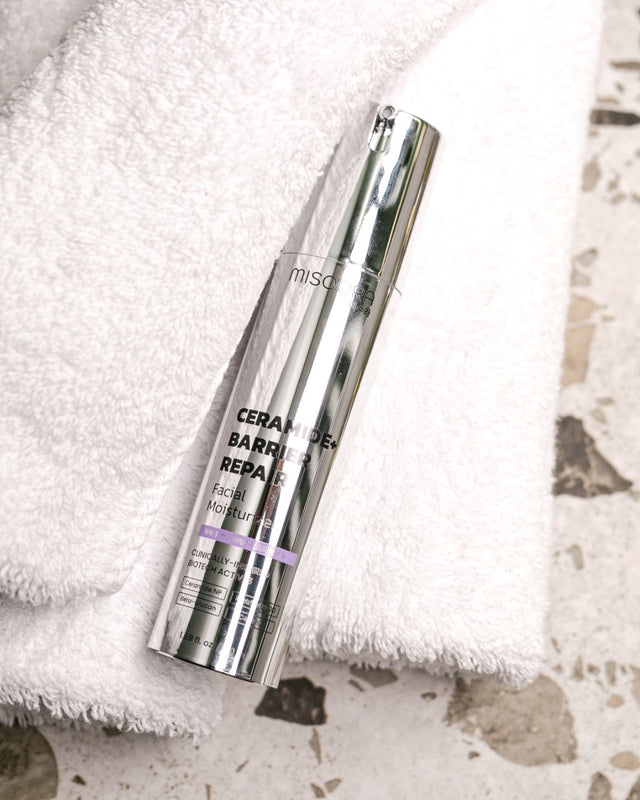
Our pick for the night of
Ceramide+ Barrier Repair Moisturizer
A rich ceramide cream with no fragrance and no ethanol, made for dry, mature skin. Smoothed on before bed, it helps skin feel comfortable and look less tired and tight by morning.
Shop Ceramide+
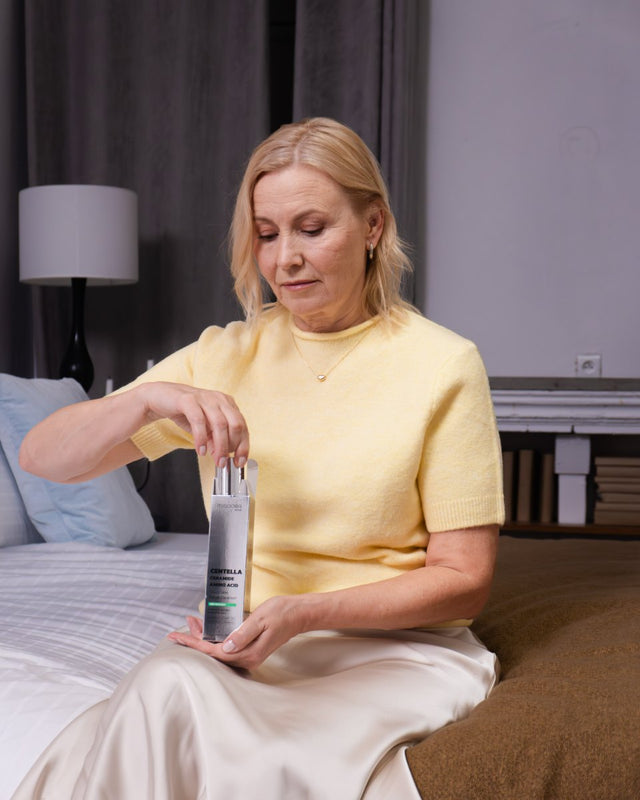
Our pick for recovery nights
PDRN Exosome EGF Night Renewal Serum
2,000 ppm PDRN with exosomes, EGF and a peptide, 2,100 ppm of actives in total. Applied after retinal and before moisturizer, it helps skin look calmer, bouncier and more rested by morning.
Shop PDRN Serum
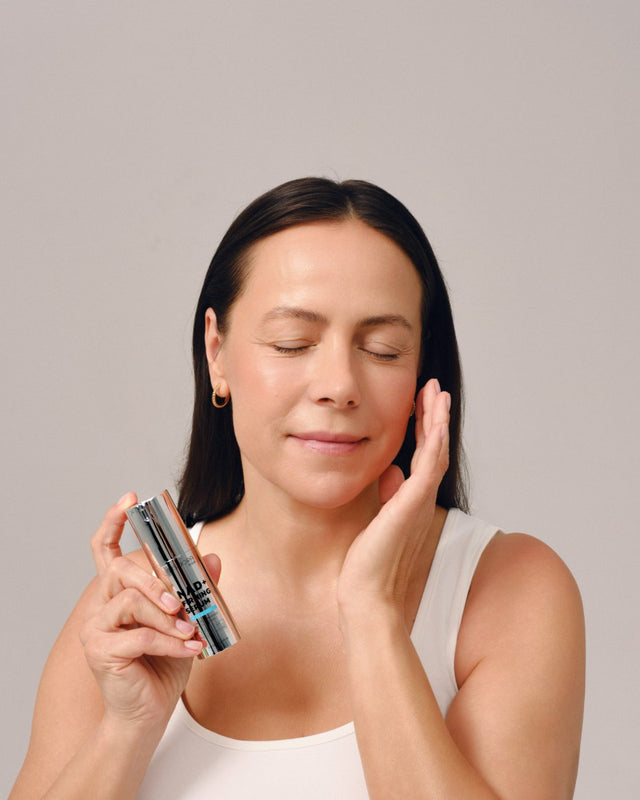
Our pick for the morning after
NAD+ Firming Serum
A lightweight morning serum with NAD+ that layers easily under moisturizer and makeup. With regular use, skin looks firmer, smoother and more awake.
Shop NAD+ Serum


Key takeaways
- In a survey of 3,267 women, 8 or more drinks a week was linked to more lines, puffiness, volume loss and visible blood vessels. 1
- Alcohol, especially red wine, is a common rosacea trigger, and rosacea risk rose with how much women drank. 2 4
- Drinking causes fluid loss and broken sleep, and poor sleep is linked to a weaker skin barrier. 6 7
- After menopause, alcohol can worsen hot flashes, and skin recovers more slowly. 5 10
- Count standard drinks, alternate with water, stop early, and keep your evening routine going. 5 8 9
08FAQ
Does alcohol cause wrinkles?
Heavy drinking has been linked to more facial lines in women, but the evidence comes from a survey, which cannot prove cause. 1 Sun, genes, smoking and sleep all matter too.
Is red or white wine worse for skin?
It depends on your skin. Red wine is a well-known trigger for rosacea flare-ups. 4 In a large study of women, white wine and liquor were the drinks most clearly linked to developing rosacea. 2
Does alcohol make hot flashes worse?
It can. Mayo Clinic notes that alcohol can intensify hot flashes and night sweats, and can trigger them in some women. 5
Can I use retinal after a night of drinking?
If your skin feels calm, yes. If it feels hot, flushed or stings, skip retinal that night and use PDRN serum and moisturizer instead.
Do hangover cures help my skin?
No hangover remedy has been shown to work. The NIAAA says time is what helps, and drinking in moderation is the only reliable prevention. 6
When should I see a doctor about a red face?
The AAD recommends seeing a dermatologist if your face is red most of the time or flushing lasts a long time. 3 If you are worried about how much you drink, talk to your doctor.
Keep reading: Rosacea after menopause · Night sweats, poor sleep and your skin
References
- Goodman GD, Kaufman J, Day D, et al. Impact of smoking and alcohol use on facial aging in women: results of a large multinational, multiracial, cross-sectional survey. Journal of Clinical and Aesthetic Dermatology. 2019;12(8):28–39.
- Li S, Cho E, Drucker AM, Qureshi AA, Li WQ. Alcohol intake and risk of rosacea in US women. Journal of the American Academy of Dermatology. 2017;76(6):1061–1067.
- American Academy of Dermatology. Does drinking cause rosacea?
- American Academy of Dermatology. Triggers could be causing your rosacea flare-ups.
- Mayo Clinic News Network. Mayo Clinic Minute: Why alcohol and menopause can be a dangerous mix. 2023.
- National Institute on Alcohol Abuse and Alcoholism. Hangovers.
- Oyetakin-White P, Suggs A, Koo B, et al. Does poor sleep quality affect skin ageing? Clinical and Experimental Dermatology. 2015;40(1):17–22.
- National Institute on Alcohol Abuse and Alcoholism. What is a standard drink?
- Koob GF. Holiday drinking and your health. NIAAA Director’s Blog. 2024.
- Ghadially R, Brown BE, Sequeira-Martin SM, Feingold KR, Elias PM. The aged epidermal permeability barrier. Journal of Clinical Investigation. 1995;95(5):2281–2290.
- Davies EL, Burton S, Monk R, Murdoch E, Pearce E, Rose AK. Women’s alcohol use in mid-life: identifying associations between menopause symptoms, drinking behaviour, and mental health. Women’s Health. 2025;21.
- Darvin ME, Sterry W, Lademann J, Patzelt A. Alcohol consumption decreases the protection efficiency of the antioxidant network and increases the risk of sunburn in human skin. Skin Pharmacology and Physiology. 2013;26(1):45–51.
- American Academy of Dermatology. 10 skin care secrets for healthier-looking skin.
Written by MISOORA Editorial. This article is for general information and is not medical advice. Talk to your doctor or a dermatologist about any skin condition, and to your doctor if you have questions about alcohol and your health. Product results are cosmetic and vary from person to person.