

Menopause & Mature Skin · Guide
It is in your coffee, your smoothie and half the ads in your feed. A new review published this summer makes the answer more interesting than a plain yes or no, so here is what collagen powder can and can’t do for skin after menopause.

The short answer
Maybe a little for dryness and bounce, and probably not for wrinkles. A 2026 review found modest gains in hydration and elasticity but no reliable effect on wrinkles.1 A 2025 review went further: trials without industry funding and higher-quality trials showed no significant benefit.2 Mayo Clinic’s dermatologist says we simply don’t know yet.3 If you enjoy your collagen, you don’t have to quit, but it should not replace daily sunscreen, a retinoid and a good moisturizer.
01Do collagen supplements actually work for skin after menopause?
The honest answer is that researchers are still arguing about it, and the argument got louder in the last 18 months. Two large reviews have landed in different places.
The 2026 update pooled randomized trials and reported better hydration and elasticity, with no meaningful change in wrinkles.1 The 2025 review of 23 trials and 1,474 people concluded there was no clinical evidence that collagen prevents or treats skin aging, once funding and study quality were taken into account.2
Notice what both have in common. Neither gives you a reason to expect a powder to smooth your lines. That is what many women buy it for, and it is the part with the least support.
02Why does skin lose collagen so fast after menopause?
How much skin collagen can be lost in the first five years after menopause, followed by an average decline of about 2.1% per postmenopausal year.4
So the instinct behind the scoop makes sense. You can see the change, you know collagen is involved, and taking more of it sounds logical. Collagen is also everywhere in your body: at least 30% of you is made of it, by Mayo Clinic’s count.3
The catch is that what is happening in your skin is a problem of making and keeping collagen, and swallowing collagen doesn’t obviously change either one. If you want the bigger picture on hormones, our guide to estrogen and your skin covers it, including what hormone therapy has and hasn’t shown.
03What happens to collagen when you swallow it?
Your body treats it as food. Harvard’s nutrition team explains that digested collagen is broken down into amino acids, which then go wherever the body most needs protein.5 It doesn’t travel to your cheeks as collagen.
Supplement makers argue that specific peptides behave differently, and some trials have tested that idea. In one double-blind study of 114 women aged 45 to 65, a daily 2.5 g dose of specific collagen peptides for eight weeks reduced eye wrinkles compared with placebo.6 That is a real result. It is also one study of one ingredient, and larger pooled analyses have not backed up a wrinkle benefit.12
04What do the newest collagen studies say?
The review that made news this year appeared in the Journal of Cosmetic Dermatology, with searches running through November 2025. Hydration improved within about four weeks, and elasticity improved by 12 weeks. Taking more did not clearly work better: length of use seemed to matter more than dose. Wrinkles did not budge.1
So if you have noticed your skin feels a bit less dry on collagen, that may not be in your head. Hydration is one of the places the signal shows up. Keep in mind that these are pooled effects in trials, and you can get hydration more directly from a moisturizer on your skin.
05Why do collagen studies disagree?
Mostly because of who paid for them and how well they were run. In the 2025 review, positive results clustered in industry-funded and lower-quality trials, while independent and higher-quality trials showed no significant effect on hydration, elasticity or wrinkles.2 Harvard makes a similar point: most of the research is tied to industry funding or author ties, which makes it hard to judge how well these products work.5
The industry has pushed back, and it is fair to hear that side. Trade groups argue the review lumped very different collagen products together, misclassified some funding, and that funding alone doesn’t make a study wrong.7 They have a point on the first count. “Collagen” covers many ingredients, so a trial of one may say little about the tub in your kitchen.
Dermatologists interviewed by NPR landed in a sensible middle: they can’t confidently recommend collagen for skin without large, independently funded trials, though some patients do feel their skin looks better.8

Where this leaves you
You are not silly for trying collagen. The research is mixed, and the marketing is very good.
But if your goal is the look of firmer, smoother skin, you can put your effort behind options with a stronger case, starting with sunscreen and a retinoid. Skin that gets those every day has less to make up for.
06Should I stop taking collagen?
Not necessarily. The research so far has not shown negative side effects, according to Harvard.5 What it comes down to is what you expect from it, and what else you might be skipping because of it.
| If this is you | What to consider |
|---|---|
| You like it and your budget is fine | Keep going, if you want to. Give it about 12 weeks, the point at which trials reported elasticity changes,1 and judge it honestly. |
| You take it for wrinkles | This is the weakest claim. Put a retinoid first.19 |
| You take it instead of skincare | Swap the order. Sunscreen and a retinoid come first, and the supplement is an optional extra.8 |
| You are buying a new brand | Be picky. The FDA does not approve supplements before they are sold,10 and Harvard notes concerns about heavy metals in collagen supplements.5 Look for independent third-party testing. |
| You take medication or have a health condition | Ask your doctor or pharmacist before adding any supplement. |
07What about collagen cream, bone broth and higher doses?
“Collagen cream puts collagen back into your skin.”
Collagen is too large to be absorbed directly through the skin, Mayo Clinic explains.3 A collagen cream can still be a pleasant moisturizer, but that is what it is.
“Bone broth is a natural collagen boost.”
Broth does contain collagen, but the amount varies by batch.5 It is fine as food. It is not a measured dose, and there is no strong evidence it helps skin.5
“Just take more and it will work better.”
The 2026 review found no significant linear link between dose and results.1 Bigger scoops mostly mean a bigger bill.
08What helps skin look firmer instead of collagen?
Asked what works best for collagen, Mayo Clinic’s dermatologist named three everyday things: avoid smoking, limit alcohol and wear sunscreen.3 An Ohio State dermatologist quoted by NPR added a Mediterranean-style diet and topical retinoids at night.8 Here is the list in the order we would tackle it:
- Daily sunscreenThe AAD recommends broad-spectrum SPF 30 or higher every day for menopausal skin, even in winter.11
- A retinoid at nightIn a controlled study of very old skin (average age 87), 0.4% retinol lotion reduced wrinkles and raised procollagen over 24 weeks on the treated arm.9
- A rich moisturizerPut it on slightly damp skin. The AAD suggests a cream for anyone perimenopausal or over 50.12
- Vitamin C and protein on your plateCitrus, berries, leafy greens, peppers and tomatoes supply the vitamin C that supports collagen production.5

One expectation to set: the AAD is clear that a cream can’t lift sagging skin.13 Skincare improves how skin looks and feels, and our guide on why skin sags after menopause explains where the limit is.

Our pick instead of the scoop
Retinal 0.2% Barrier Serum
If you add one thing, make it a retinoid. Retinal belongs to the same vitamin A family as retinol, and in a 44-week study it caused significantly less scaling than prescription retinoic acid.14 Made for mature, sensitive skin, it helps skin look smoother and firmer over time.
Shop Retinal 0.2%
Our pick for skin that looks thinner
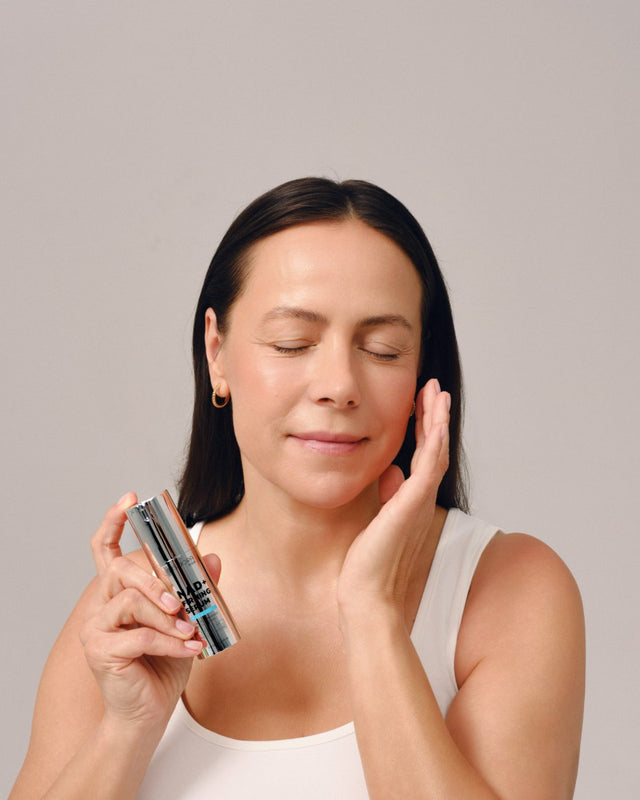
PDRN Exosome EGF Night Renewal Serum
2,000 ppm PDRN with exosomes, EGF and a peptide, 2,100 ppm of actives in total. Applied after retinal at night, it helps skin look denser and more rested.
Shop PDRN Serum
Our pick for the dryness collagen promises to fix
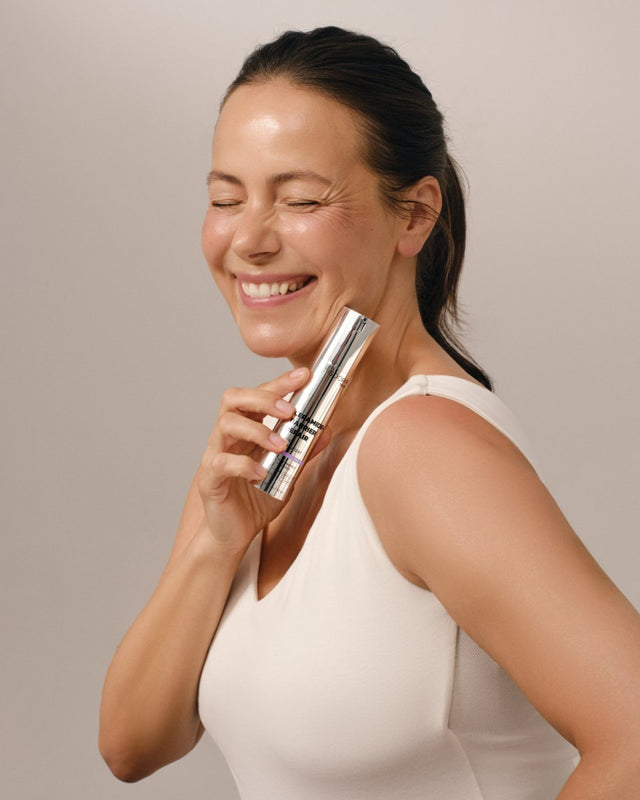
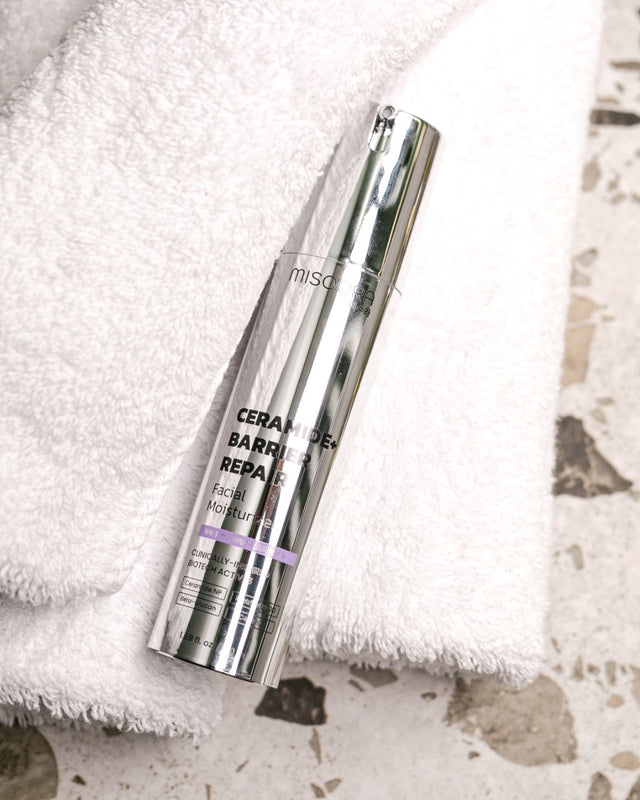
Ceramide+ Barrier Repair Moisturizer
Hydration is where collagen shows its best numbers, and a good cream works on it directly. This one is ceramide-rich, with no fragrance and no ethanol, for dry, mature skin.
Shop Ceramide+09A simple routine to put the money toward
If you have been buying collagen every month, here is a thought experiment: what if that same line in your budget went to a routine you put directly on your skin? Morning is about protection and comfort. Evening is about smoother-looking skin over time.
Morning
Cleanser, NAD+ Firming Serum, Ceramide+ moisturizer on slightly damp skin, then your SPF 30 or higher.11
Evening
Cleanser, Retinal 0.2%, PDRN serum, then Ceramide+. New to retinoids? Start two nights a week and build up slowly.


Key takeaways
- Up to 30% of skin collagen can go in the first five years after menopause.4
- A 2026 review found modest gains in hydration and elasticity, and no reliable change in wrinkles.1
- In a 2025 review, independent and higher-quality trials showed no significant benefit.2
- Digested collagen becomes amino acids, which go wherever the body needs protein.5
- Collagen is too large to pass through skin from a cream.3
- Sunscreen and a retinoid have a stronger case, so start there.39
10FAQ
Is collagen worth taking after 50?
It depends on what you want from it. For a little more hydration and bounce, some trials are encouraging, though the better independent studies are not.12 For wrinkles, the evidence is weak. Treat it as optional.
How long does collagen take to work?
In the 2026 review, hydration benefits appeared by about four weeks and elasticity results were reported at 12 weeks.1 If you see no difference after three months, you have your answer.
Is marine collagen better than bovine collagen?
We did not find good evidence to rank them for skin. Trade groups themselves point out that the trials test many different collagen products,7 so a claim that one source is best should make you ask for the study.
Does collagen help with menopause symptoms?
The trials discussed here looked at skin measures, not symptoms like hot flashes, so they can’t answer that. Talk to your doctor or a menopause specialist about symptoms.
Can I take collagen and use retinal?
We know of no reason to keep them apart, since one is food and the other is skincare. If you are on medication, check with your pharmacist about the supplement. Use retinal at night and wear sunscreen in the morning.
Keep reading: Retinal vs retinol vs tretinoin after 50 · Eating for your skin after menopause
References
- Batool A, Abbas MS, Farooq R, et al. Oral collagen peptides and skin rejuvenation: a systematic review and an updated meta-analysis of randomized controlled trials. Journal of Cosmetic Dermatology. 2026;25(7):e71041. Findings as reported by Dermatology Times, August 2026.
- Myung SK, Park Y. Effects of collagen supplements on skin aging: a systematic review and meta-analysis of randomized controlled trials. American Journal of Medicine. 2025.
- Mayo Clinic News Network. Mayo Clinic Q&A: Does collagen really help fight wrinkles and aging? 2024.
- Calleja-Agius J, Muscat-Baron Y, Brincat MP. Skin ageing. Menopause International. 2007;13(2):60–64.
- Harvard T.H. Chan School of Public Health, The Nutrition Source. Collagen.
- Proksch E, Schunck M, Zague V, et al. Oral intake of specific bioactive collagen peptides reduces skin wrinkles and increases dermal matrix synthesis. Skin Pharmacology and Physiology. 2014;27(3):113–119.
- CosmeticsDesign. Industry pushes back on meta-analysis concluding collagen supplements show no benefit for skin aging. August 2025.
- NPR. Can collagen supplements improve your skin? Here’s what the research shows. 2025.
- Kafi R, Kwak HS, Schumacher WE, et al. Improvement of naturally aged skin with vitamin A (retinol). Archives of Dermatology. 2007;143(5):606–612.
- US Food and Drug Administration. Questions and answers on dietary supplements.
- American Academy of Dermatology. Skin care during menopause.
- American Academy of Dermatology. How to pick the right moisturizer for your skin.
- American Academy of Dermatology. Firm sagging skin.
- Fluhr JW, Vienne MP, Lauze C, Dupuy P, Gehring W, Gloor M. Tolerance profile of retinol, retinaldehyde and retinoic acid under maximized and long-term clinical conditions. Dermatology. 1999;199(Suppl 1):57–60.
Written by MISOORA Editorial. This article is for general information and is not medical advice. Talk to your doctor before starting a supplement, and see a dermatologist about any skin change that worries you. Product results are cosmetic and vary from person to person.