

Menopause & Mature Skin · Guide
You wake up, look in the mirror, and there is a crease down your cheek that used to fade by breakfast. Now it is still there at lunch. Here is why pillow lines hang around longer after menopause, and what you can start doing tonight.

The short answer
Sleep wrinkles are lines pressed into your face by the pillow, not by your expressions. Sleeping on your side or stomach squashes and stretches the skin night after night, and the lines get worse with repetition and with thinner, less elastic skin.12 That is exactly the kind of skin menopause leaves behind.3 The fix has two parts: take some pressure off your face at night, and help the skin itself with a retinoid and a good moisturizer.410
01What are sleep wrinkles?
Most wrinkles come from movement. Years of frowning, squinting and smiling fold the skin along the same lines until they stay. Sleep wrinkles have a different cause. A 2016 review in the Aesthetic Surgery Journal described them as lines that form when the face is pressed against the pillow, as compression, shear and stretching forces distort the skin during side and stomach sleeping.1
They look different, too. The authors noted that sleep lines usually run at an angle to expression lines, often close to perpendicular, although some deepen the expression lines you already have.2 That is why a crease can run straight down one side of your forehead or across your cheek in a direction no facial muscle would fold it.
One practical consequence: because muscles don't make these lines, wrinkle-relaxing injections do little for them, the plastic surgeons behind the review pointed out.2
02Why do pillow creases last longer after menopause?
How much skin collagen can be lost in the first five years after menopause, followed by an average decline of about 2.1% per postmenopausal year.3
Younger skin is springy. Press a crease into it and it smooths out within minutes. Skin with less collagen and elasticity takes longer to recover, and the review's lead author said sleep wrinkles get worse with repetition and with thinner, less elastic skin.2 So the crease that once vanished in the shower may still be there mid-morning.
Your nights change with age, too. We all shift position without noticing, but the number of shifts drops from about 27 a night to about 16 as we get older.2 Fewer turns means longer stretches with the same cheek pressed into the pillow.
If you want the full picture of what falling estrogen does to collagen, our guide to estrogen and your skin covers it.
03Where do sleep lines show up?
Most often on the forehead, the cheeks and around the lips.2 They also tend to favor one side: the side you sleep on. That is the easiest way to tell them apart from expression lines, which usually show up on both sides of the face.

Try the one-week mirror check
For a week, look at your face right after you wake up, before you wash it. Note where the creases are and which way they run.
- Lines only on one side point to the pillow.
- Lines that run across, rather than along, your usual expression lines point to the pillow.
- Lines that match your smile or frown on both sides are expression lines, and sleep can still deepen them.2
What about chest wrinkles?
The same pressure works below the face. If you sleep on your side and wake up with vertical creases on your chest, the skin there is being folded for hours at a time, the same way your cheek is.
Treat that skin like part of your face: sunscreen by day, and your night products taken all the way down past your jaw. Our guide to crepey skin on the neck and chest goes into more detail.

04Does poor sleep during menopause make it worse?
It can add to the problem. Between 40% and 56% of women have sleep problems during the menopause transition, often driven by hot flashes and night sweats, according to the European Menopause and Andropause Society.5
Broken sleep matters for skin in its own right. In a small study presented at a 2013 dermatology meeting, women aged 30 to 49 who slept poorly showed more signs of intrinsic skin aging than good sleepers, and their skin barrier recovered more slowly after a skin stress test.6 It was not a large trial, but it fits with what many women notice in the mirror after a run of bad nights.
Night is also when your skin is thirstiest. A 2019 review notes that skin loses more water in the evening and is more permeable at night,7 which is a good argument for doing your most nourishing skincare before bed. For hot flashes and night sweats themselves, talk to your doctor. Our guide to night sweats, poor sleep and your skin has the skincare side.
05How do I stop getting sleep wrinkles?
The plastic surgeons who wrote the review were blunt: the only reliable way to reduce sleep wrinkles is to stop the face from being distorted during sleep, and sleeping on your back is the best way to do that.12 They also admitted that changing a sleep habit is hard. Here is how to make it easier.
- Start the night on your backYour starting position is a conscious choice, even if the rest of the night is not.2 Every hour you begin on your back is an hour without a cheek in the pillow.
- Make back sleeping comfortableA pillow under your knees and one on each side can make it harder to roll over without thinking about it. If you snore or have sleep apnea or back pain, ask your doctor which position suits you best.
- Look at specialty pillows with clear eyesPillows designed to keep the face from pressing into the surface exist and were mentioned in the review.1 Note that the lead author disclosed a partnership in a company that makes one.8
- If you must sleep on your side, share the loadSwitching sides from night to night at least spreads the pressure, so one cheek isn't taking all of it.
06Do silk pillowcases prevent wrinkles?
“A silk pillowcase stops sleep wrinkles.”
A smooth fabric may drag on your skin less than rough cotton, and it feels lovely. But your face is still pressed into the pillow, and compression is the main cause the review describes.1 We could not find a controlled trial showing silk prevents wrinkles. Think of it as a nice extra, not a fix.
“Botox will take care of my sleep lines.”
Wrinkle-relaxing injections work on muscle-driven lines. Sleep lines are made by pressure, so neurotoxins have little effect on them.2
“If I switch to back sleeping, the lines will go away.”
Taking the pressure off stops you from adding new creases night after night.1 Lines that are already set take time, and that is where skincare earns its place.
07What helps sleep lines look softer?
You can't change the pillow's physics with a cream, but you can help the skin that takes the pressure. The review's authors listed the everyday basics: sunscreen, not smoking, good nutrition and consistent skincare.2 For the lines themselves, here is where the evidence is strongest.
| Step | Why it helps |
|---|---|
| A retinoid at night | In a controlled study of naturally aged skin, 0.4% retinol reduced fine wrinkles and raised procollagen over 24 weeks.4 Retinal is in the same vitamin A family. |
| A rich moisturizer | The AAD suggests a cream for anyone perimenopausal or over 50, applied to slightly damp skin.10 Hydrated skin looks smoother, and night is when skin loses the most water.7 |
| Daily sunscreen | The AAD recommends broad-spectrum SPF 30 or higher every day for menopausal skin.11 Use it on your neck and chest too. |
| Less pressure | Back sleeping, or at least less time with one cheek in the pillow.1 |

Our pick for lines that linger
Retinal 0.2% Barrier Serum
A retinoid is the step with the strongest track record for fine lines.4 Retinal caused significantly less scaling than prescription retinoic acid in a 44-week study,9 and this serum was made for mature, sensitive skin. Over time, skin looks smoother and creases look softer.
Shop Retinal 0.2%
Our pick for skin that looks tired by morning
PDRN Exosome EGF Night Renewal Serum
2,000 ppm PDRN with exosomes, EGF and a peptide, 2,100 ppm of actives in total. Applied after retinal, it helps skin look denser, bouncier and more rested when you wake up.
Shop PDRN Serum
Our pick for the night-time moisture dip
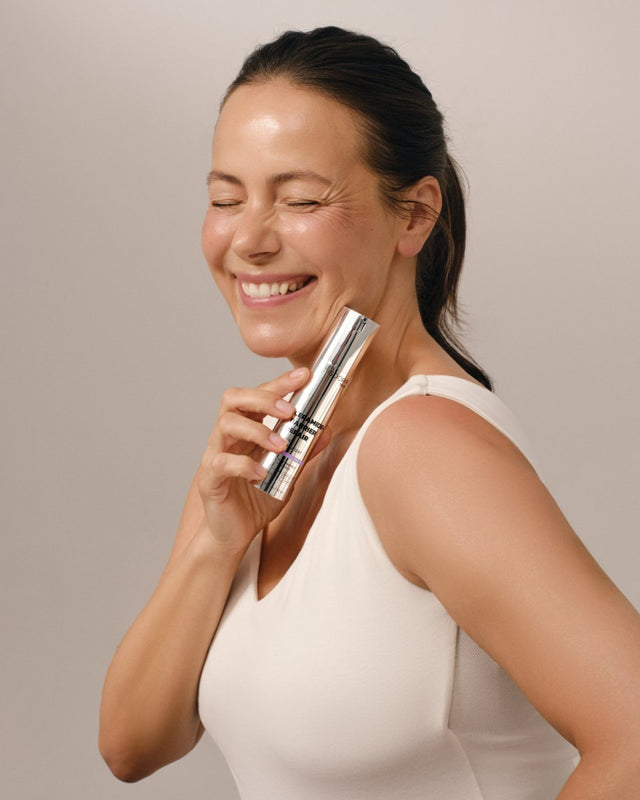
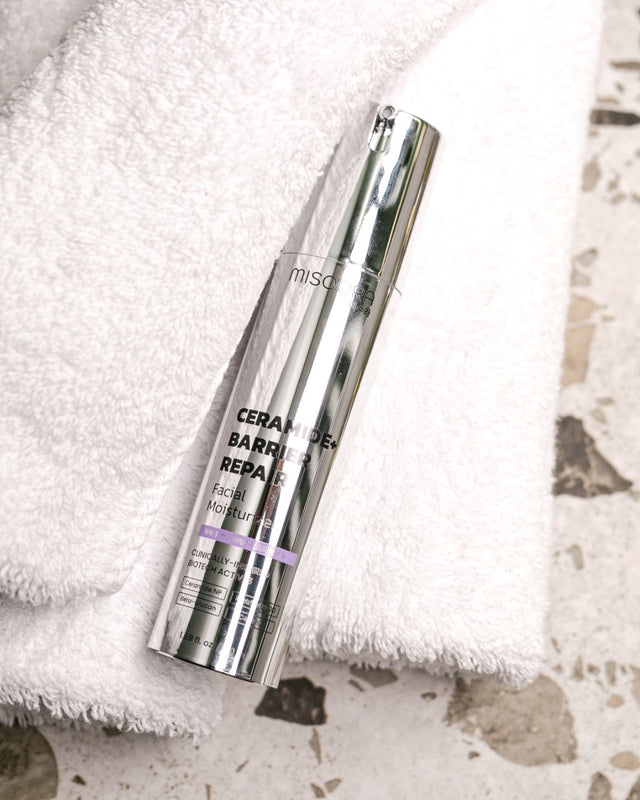
Ceramide+ Barrier Repair Moisturizer
A ceramide-rich cream with no fragrance and no ethanol, for dry, mature skin. Put it on last at night, while skin is still slightly damp, so creases have plump, hydrated skin to settle into.
Shop Ceramide+08A night routine for fewer morning creases
Every evening
- Cleanse gently with lukewarm water.
- Retinal 0.2% on dry skin. New to retinoids? Start two or three nights a week.
- PDRN serum.
- Ceramide+ moisturizer on face, neck and chest.
- Lie down on your back, with pillows to help you stay there.
Every morning
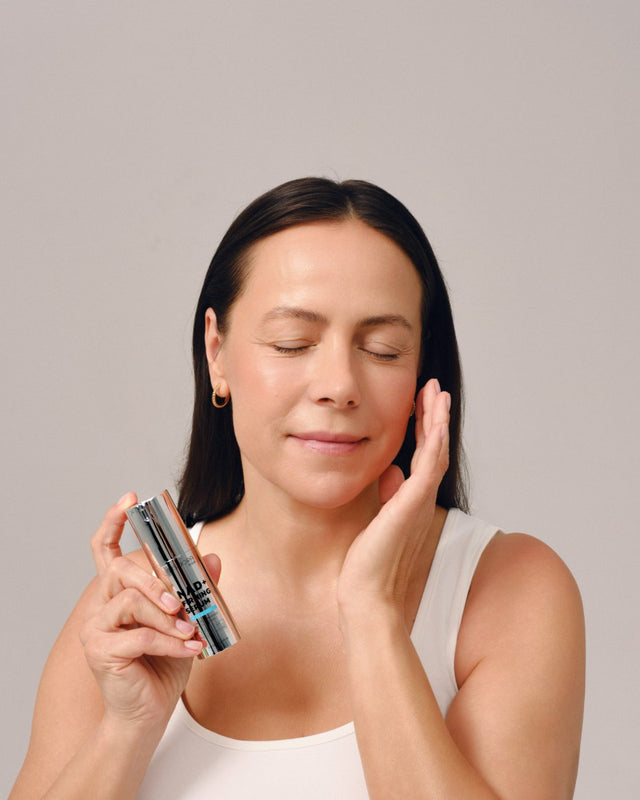
Cleanser, NAD+ Firming Serum, Ceramide+, then SPF 30 or higher11 on your face, neck and chest.


Key takeaways
- Sleep wrinkles come from pillow pressure, not facial expressions, and often run at an angle to expression lines.12
- They get worse with repetition and with thinner, less elastic skin, which is what menopause brings.23
- Look for lines on the side you sleep on, on the forehead, cheeks and around the lips.2
- Back sleeping is the most reliable way to stop new creases.1
- Silk is a nice extra, but your face is still being pressed.1
- A retinoid, a rich moisturizer and daily sunscreen help the skin itself look smoother.41011
09FAQ
Are sleep wrinkles permanent?
At first they fade within hours of waking. With years of repetition and less elastic skin, they can stay.2 Taking pressure off your face and caring for the skin both help them look softer over time.
Why do I wake up with lines on one side of my face?
That is usually the side you sleep on. Sleep lines form where your face meets the pillow, so they tend to show up on one side.1
Is it worth buying a silk pillowcase?
If you like it, yes, but don't expect it to prevent wrinkles. It may reduce friction, while the pressure that causes sleep lines remains.1
Can I use retinal every night?
Many people can, but build up to it. Start two or three nights a week, follow with moisturizer, and wear sunscreen in the morning. If your skin gets irritated, cut back.
Is back sleeping right for everyone?
Not necessarily. If you snore, have sleep apnea or have back or neck pain, ask your doctor which position suits you before you change how you sleep.
Will hormone therapy help sleep wrinkles?
Hormone therapy is a medical decision with its own benefits and risks, so it is one to make with your doctor, not for wrinkles alone. For what topical options can and can't do, see our guide to estrogen face cream.
Keep reading: Night sweats, poor sleep and your skin · Retinal vs retinol vs tretinoin after 50
References
- Anson G, Kane MAC, Lambros V. Sleep wrinkles: facial aging and facial distortion during sleep. Aesthetic Surgery Journal. 2016;36(8):931–940.
- The Aesthetic Society. Study shows stomach and side sleeping positions cause facial distortion and wrinkles over time. Press release, 2016.
- Calleja-Agius J, Muscat-Baron Y, Brincat MP. Skin ageing. Menopause International. 2007;13(2):60–64.
- Kafi R, Kwak HS, Schumacher WE, et al. Improvement of naturally aged skin with vitamin A (retinol). Archives of Dermatology. 2007;143(5):606–612.
- European Menopause and Andropause Society. Menopause Essentials 2026: Sleep problems.
- University Hospitals Case Medical Center. Estée Lauder clinical trial finds link between sleep deprivation and skin aging. EurekAlert, July 2013. Study: Baron E, et al., International Investigative Dermatology Meeting, 2013.
- Lyons AB, Moy L, Moy R, Tung R. Circadian rhythm and the skin: a review of the literature. Journal of Clinical and Aesthetic Dermatology. 2019;12(9):42–45.
- Healio. Researchers review wrinkles occurring through facial compression during sleep. July 2016.
- Fluhr JW, Vienne MP, Lauze C, Dupuy P, Gehring W, Gloor M. Tolerance profile of retinol, retinaldehyde and retinoic acid under maximized and long-term clinical conditions. Dermatology. 1999;199(Suppl 1):57–60.
- American Academy of Dermatology. How to pick the right moisturizer for your skin.
- American Academy of Dermatology. Skin care during menopause.
Written by MISOORA Editorial. This article is for general information and is not medical advice. Talk to your doctor about sleep problems, hot flashes or any skin change that worries you. Product results are cosmetic and vary from person to person.