

Menopause & Mature Skin · Guide
The lines between your brows used to fade by lunchtime. Now they are there when you wake up. Here is why forehead wrinkles and frown lines settle in after menopause, why they look deeper in winter, and what softens their look without needles.

The short answer
Forehead lines and the vertical “11” lines between your brows start as expression lines: small muscles fold the skin every time you raise your brows or frown. Over the years, lines that come and go turn into lines that stay, even when your face is relaxed.2 Menopause speeds this up, because skin loses about 30% of its collagen in the first five years.1 Dry winter air adds roughness on top.3 No cream can relax a muscle. A retinoid at night and a rich moisturizer can visibly soften the look of these lines over a few months, and daily sunscreen helps protect the result.457
01What are 11 lines, and what causes forehead wrinkles?
The upper face is one of the most expressive parts of your body. Several small muscles sit under the skin of the forehead and brows, and each one leaves its own pattern of lines.2
The vertical lines between the brows are called glabellar lines, though most people know them as the “11s.” They come from the corrugator muscles, which draw the brows together when you concentrate, squint or worry. The procerus pulls the brows down and can add a short horizontal line across the top of the nose.2 The long horizontal lines higher up come from the frontalis, the broad muscle that raises your brows.
Squinting adds to the pattern. The American Academy of Dermatology (AAD) notes that wearing sunglasses can help reduce lines caused by squinting.4
02Why do frown lines get deeper after menopause?

At 30, a frown line shows up when you frown and disappears when you stop. That is a dynamic line. With time, dynamic lines become static wrinkles, which stay visible even when your face is at rest.2
Collagen drops fast after menopause
Collagen gives skin its thickness and bounce. According to the AAD, women’s skin loses about 30% of its collagen during the first five years of menopause, then about 2% a year for the next 20 years.1
Same expressions, less support
You probably aren’t frowning more than you used to. Your skin simply has less support to bounce back from the expressions you have made for decades, so the folds take longer to smooth out and, eventually, stop smoothing out at all.
of skin collagen is lost in the first five years of menopause, according to the American Academy of Dermatology.1
03Why do forehead lines look worse in winter?
If your forehead looks more lined in November than it did in July, you are not imagining it. A study that followed postmenopausal women through the seasons found that their skin held less water in winter. In women not using hormone therapy, the roughness of the skin surface nearly doubled from summer to winter, and visible flaking more than doubled.3
The study measured hands, not foreheads, but your face goes out into the same weather. Rough, dry skin catches light unevenly and makes every fine line easier to see. The AAD explains that moisturizer traps water in the skin, giving it a more youthful appearance,4 and recommends applying it after bathing and whenever skin feels dry.1 For a full cold-weather plan, see our guide to dry skin after menopause.

Our pick for winter dryness
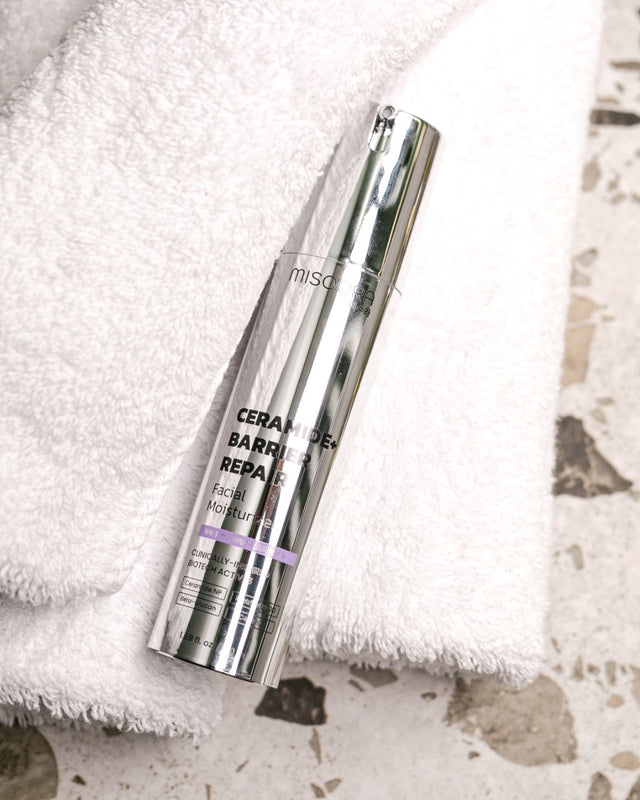
Ceramide+ Barrier Repair Moisturizer
A rich, fragrance-free ceramide cream made for dry, mature skin. Smoothed over the forehead morning and night, it helps skin feel comfortable and makes fine lines look softer.
Shop Ceramide+04Can creams get rid of 11 lines without Botox?
Not completely, and it helps to know why. Injections such as Botox relax the muscles that fold the skin. They are the most popular minimally invasive cosmetic treatment in the US, with about 9.9 million neuromodulator procedures in 2024.8 A cream works on the skin, not the muscle, so be wary of anything sold as “Botox in a bottle.”
What skincare can do is improve the skin the lines sit in: more water, a smoother surface and, with retinoids, a firmer-looking texture over months.
What the studies show
- Retinal (retinaldehyde). In a 44-week trial with 125 people, a 0.05% retinal cream reduced wrinkle and roughness measures at week 18, as did prescription retinoic acid. Retinal was well tolerated, while retinoic acid caused more irritation.5
- Retinol. In older adults with an average age of 87, 0.4% retinol applied to the arm for 24 weeks reduced fine wrinkles and increased the skin’s production of procollagen, a building block of collagen, and of water-holding molecules.6
- Peptides. The AAD notes that products with retinol or peptides may help increase collagen in the skin.1
Not sure which form of vitamin A to choose? Our guide to retinal vs retinol vs tretinoin after 50 compares them for mature, sensitive skin.
“A cream can work like Botox.”
Creams don’t relax muscles. They can improve hydration and the look of skin texture, so lines look softer, but expression lines will still form when you frown.
“Once a line is set, skincare can’t touch it.”
A deep static line won’t disappear with skincare. Still, in studies, retinoids measurably reduced the look of wrinkles over 18 to 24 weeks.56

Our pick for set-in lines
Retinal 0.2% Barrier Serum
A retinal serum made for mature, sensitive skin. Used at night, it helps smooth the look of forehead lines and uneven texture over time. Start with two or three nights a week.
Shop Retinal 0.2%05A routine that softens forehead and frown lines
The routine is short. The order matters at night: retinal first, then PDRN serum, then moisturizer.
Habits that protect your forehead
- Wear sunscreen every dayIn a 4.5-year trial of 903 adults under 55, people who used sunscreen daily were 24% less likely to show increased skin aging than those who used it when they chose to.7 The AAD recommends broad-spectrum SPF 30 or higher every day, winter included.1
- Wear sunglassesThey help reduce lines caused by squinting.4
- Skip anything that stingsThe AAD advises stopping skin care products that sting or burn.4

Morning
Protect and hydrate


Evening
Smooth and repair


Our pick for nights after retinal
PDRN Exosome EGF Night Renewal Serum
2,000 ppm PDRN with exosomes, EGF and a peptide, 2,100 ppm of actives in total. Applied after retinal and before moisturizer, it helps skin look bouncier and smoother by morning.
Shop PDRN Serum
Our pick for mornings
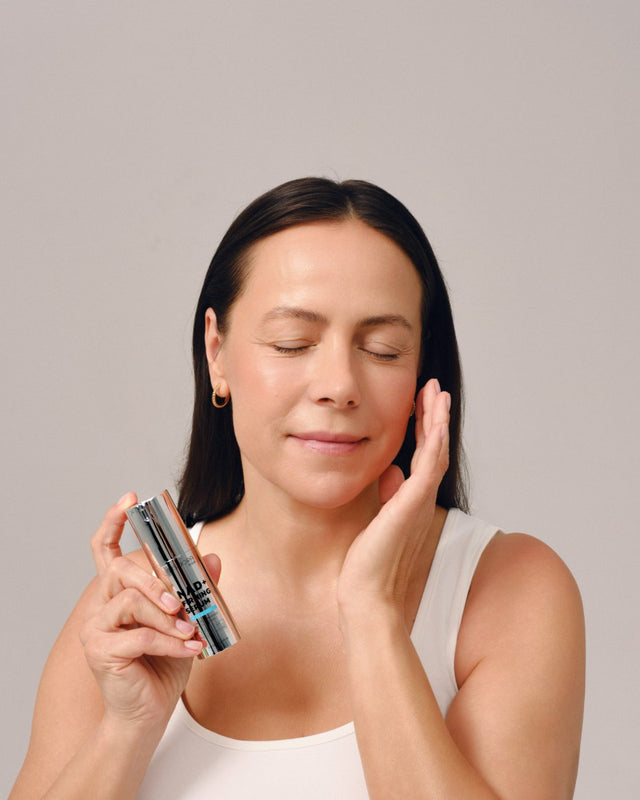
NAD+ Firming Serum
A lightweight morning serum with NAD+ that layers easily under moisturizer, sunscreen and makeup. With regular use, skin looks firmer and smoother.
Shop NAD+ Serum


06Does face yoga work for forehead wrinkles?
Facial exercise has one small but encouraging study behind it. In a Northwestern University trial, 16 women aged 40 to 65 finished a 20-week program of 30-minute facial exercises, done daily for 8 weeks and then every other day. Dermatologists’ average estimate of their age fell from 50.8 to 48.1 years.9
The clearest gains were fuller-looking upper and lower cheeks, and the study was too small to say much about forehead or frown lines.9 If you enjoy it, keep going, but treat it as an extra, not a replacement for sunscreen and a retinoid.
07When to see a dermatologist
A good routine softens the look of lines. If you want deep frown lines to fade further, a board-certified dermatologist can talk you through in-office options. Neuromodulators led minimally invasive cosmetic procedures in the US in 2024, followed by hyaluronic acid fillers at about 5.3 million procedures.8 Skincare still matters after any treatment, because it keeps the skin around the lines hydrated and protected from the sun.
Key takeaways
- Forehead lines and 11 lines start as expression lines and, over time, become lines that stay at rest.2
- Skin loses about 30% of its collagen in the first five years of menopause, so lines set in faster.1
- Winter dryness roughens mature skin and makes lines easier to see; a rich moisturizer helps.34
- Creams can’t relax muscles, but retinoids reduced the look of wrinkles in studies within 18 to 24 weeks.56
- Daily sunscreen and sunglasses protect the progress you make.47
08FAQ
What causes the 11 lines between my eyebrows?
The corrugator muscles pull the brows together when you frown, concentrate or squint. Over the years, the folds they create can become lines that stay at rest.2
Why are my forehead wrinkles getting worse after menopause?
Skin loses about 30% of its collagen during the first five years of menopause, so it has less support to bounce back from everyday expressions.1
Can I get rid of 11 lines without Botox?
Skincare won’t erase deep lines, but it can soften how they look. Retinoids reduced the look of wrinkles in studies,56 moisturizer makes skin look smoother,4 and daily sunscreen helps slow further skin aging.7
How long does retinal take to work on forehead lines?
Give it at least three to four months. In the studies above, changes were measured at 18 and 24 weeks.56 Our week-by-week skincare timeline explains what to expect and when.
Can I use retinal between my eyebrows?
Yes. Apply a thin layer to dry skin over the forehead and between the brows, keeping it off the eyelids. If your skin stings or burns, cut back to fewer nights.4
Can deep forehead wrinkles be a sign of heart disease?
One French study of 3,200 working adults, presented at a cardiology congress in 2018, found that people with the deepest forehead wrinkles had almost 10 times the risk of dying over 20 years compared with people with none, after adjusting for age, smoking, blood pressure and other factors. The researchers said the link needs to be confirmed and that wrinkles do not replace standard checks such as blood pressure and cholesterol.10 If you are worried about your heart, talk to your doctor.
Keep reading: Sleep wrinkles after menopause · Lip lines after menopause
References
- American Academy of Dermatology. Skin care during menopause.
- de Sanctis Pecora C, Pinheiro MVB, Ferreira KV, Nunes GJB, Miot HA. The One21 technique: an individualized treatment for glabellar lines based on clinical and anatomical landmarks. Clinical, Cosmetic and Investigational Dermatology. 2021;14:97–105.
- Delvenne M, Piérard-Franchimont C, Seidel L, Albert A, Piérard GE. The weather-beaten dorsal hand: clinical rating, shadow casting optical profilometry, and skin capacitance mapping. BioMed Research International. 2013;2013:913646.
- American Academy of Dermatology. 11 ways to reduce premature skin aging.
- Creidi P, Vienne MP, Ochonisky S, et al. Profilometric evaluation of photodamage after topical retinaldehyde and retinoic acid treatment. Journal of the American Academy of Dermatology. 1998;39(6):960–965.
- Kafi R, Kwak HSR, Schumacher WE, et al. Improvement of naturally aged skin with vitamin A (retinol). Archives of Dermatology. 2007;143(5):606–612.
- Hughes MCB, Williams GM, Baker P, Green AC. Sunscreen and prevention of skin aging: a randomized trial. Annals of Internal Medicine. 2013;158(11):781–790.
- American Society of Plastic Surgeons. Interest in aesthetic health remained consistent despite economic uncertainty in 2024. 2025.
- Alam M, Walter AJ, Geisler A, et al. Association of facial exercise with the appearance of aging. JAMA Dermatology. 2018;154(3):365–367.
- European Society of Cardiology. Deep forehead wrinkles may signal a higher risk for cardiovascular mortality. Press release, ESC Congress 2018.
Written by MISOORA Editorial. This article is for general information and is not medical advice. Talk to a board-certified dermatologist about any skin concern and to your doctor about your heart health. Product results are cosmetic and vary from person to person.