

Menopause & Mature Skin · Ingredient Guide
You layer on a hyaluronic acid serum every morning, and by lunchtime your face feels tight again. If the heating is on and your skin is drier than it has ever been, here is what hyaluronic acid can and cannot do after menopause, why ceramides matter more in winter, and how to use the two together.

The short answer
For dry skin after menopause, you usually need both, but ceramides do the heavier lifting in winter. Hyaluronic acid is a humectant: it pulls water into the top layer of skin, and in studies it improved hydration and elasticity.4 It cannot stop that water from escaping, and on its own it can even draw water up from deeper skin and lose it to dry air.5 Ceramides, cholesterol and fatty acids are the lipids that seal the barrier, and older skin has less of them, especially in winter.2 Apply hyaluronic acid to damp skin, then always finish with a lipid-rich moisturizer.57
01Why is skin so dry after menopause, especially in winter?
Dry skin after menopause is not just a feeling. As estrogen falls, skin becomes thinner, holds less collagen and turns noticeably drier.1 Several changes stack up at once.
- Fewer barrier lipids. In a study of women of different ages, every major lipid in the outer layer of skin decreased with age, and ceramides dropped the most.2
- Even fewer in winter. The same study found lipid levels on the face, hands and legs were markedly lower in winter than in spring and summer.2
- Less hyaluronic acid near the surface. About half of the body's hyaluronic acid sits in the skin, but in older skin the hyaluronic acid of the outer layer, the epidermis, largely disappears.3
- Slower repair. Older skin takes longer to rebuild its barrier after it is damaged.9

Then the heating goes on. Warm indoor air holds little moisture, and a barrier that is short on lipids lets water escape faster. That is why the same moisturizer that worked in September can feel useless by December.
The result is a familiar pattern: tightness after washing, flaky patches around the nose and chin, makeup that clings to dry spots, and lines that look deeper by the end of the day.
The good news is that this kind of dryness responds well to the right routine. The key is knowing which ingredient fixes which part of the problem.
02What does hyaluronic acid actually do for mature skin?
Hyaluronic acid is a sugar-based molecule your skin already makes. It binds and holds water, which is why it gives skin its cushioned, bouncy feel.3 In skincare it works as a humectant: it draws water into the top layer of the skin.5
of all the hyaluronic acid in the body is found in the skin. In aging skin, the hyaluronic acid of the outer layer largely disappears, while the deeper layer keeps more of it.3
Topical hyaluronic acid does have evidence behind it. In a study of 76 women aged 30 to 60, creams with 0.1% hyaluronic acid were applied around the eyes twice a day for 60 days. Every version significantly improved hydration and elasticity compared with a plain cream. Only the two smallest molecule sizes also reduced the look of wrinkle depth.4
So hyaluronic acid is a useful ingredient, especially for skin that looks dehydrated and slightly crinkly. What it does not do is rebuild the barrier. It brings water in, but it has no way to keep it there.
03Can hyaluronic acid make dry skin worse?
You may have read that hyaluronic acid “pulls moisture out of your skin” in dry weather. The full picture is more useful than the scare.
Humectants attract water from two places: the air around you and the deeper layers of your skin. When the air is dry, more of that water comes from below. A review of moisturizers notes that humectants can increase water loss through the skin by drawing water from the dermis into the epidermis, which is why they are frequently combined with occlusive ingredients that slow evaporation.5
In practice, hyaluronic acid rarely makes skin worse when you use it the right way. Problems show up when it is the last thing on your face in a heated room. Three fixes cover almost every case:
- Apply it to damp skin, not bone-dry skin. Occlusive ingredients work best on dampened skin,5 and dermatologists recommend moisturizing while skin is still damp.7
- Always seal it with a cream that contains barrier lipids or occlusive ingredients.
- Raise the humidity where you sleep. The EPA suggests keeping indoor humidity ideally between 30 and 50 percent,8 and the AAD recommends a humidifier for dry skin.7
04What do ceramides do that hyaluronic acid cannot?
Think of the outer layer of your skin as a brick wall. The skin cells are the bricks. Ceramides, cholesterol and free fatty acids are the mortar that fills the gaps between them. When the mortar thins, water slips out between the bricks and irritants slip in.
That is exactly the part of the barrier that changes after 50. Ceramides decline with age,2 and research on aged skin found that the outer layer was low on lipids and slower to recover after damage.9 Hyaluronic acid cannot fill those gaps. Barrier lipids can.
The ratio matters too. In aged skin, a mix of ceramides, cholesterol and fatty acids with cholesterol as the dominant lipid sped up barrier recovery, including in people around 80 years old. A mix dominated by fatty acids actually slowed it down.6 That is why the best barrier creams for mature skin include cholesterol alongside ceramides, not ceramides alone.
is how much petrolatum, at a concentration of at least 5%, can reduce water loss through the skin. Occlusive ingredients like it work best on damp skin.5

Our pick for dry, tight winter skin
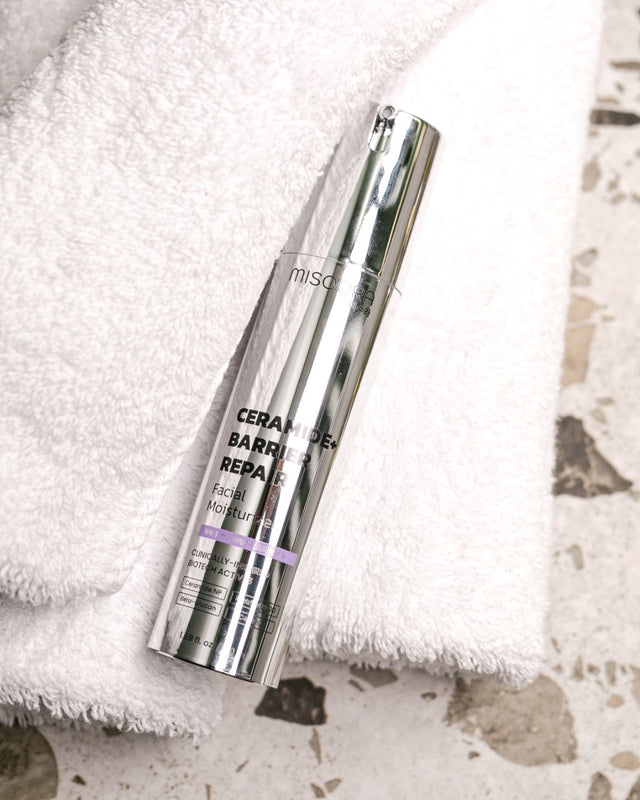
Ceramide+ Barrier Repair Moisturizer
A rich, fragrance-free cream built around the lipids a healthy barrier relies on. It seals in whatever serum you use underneath, so skin feels cushioned instead of tight by midday.
Shop Ceramide+05Hyaluronic acid or ceramides: which one do you need?
Most women over 50 need a little of both, but the balance depends on what your skin is telling you.
| What you notice | What it usually means | Start with |
|---|---|---|
| Tight right after washing | Cleanser is too harsh for a lipid-poor barrier | A gentle, non-stripping cleanser and a ceramide cream straight after |
| Flaky, rough patches | Barrier lipids are low | Ceramides with cholesterol, twice a day |
| Stinging from products you used to tolerate | The barrier is letting irritants through | A pared-back routine: cleanser, ceramide moisturizer, sunscreen |
| Fine, crinkly lines that soften after moisturizing | The surface is short on water | Hyaluronic acid on damp skin, sealed with a cream |
| Dry, dull and tight all at once | Low water and low lipids | Both: hyaluronic acid first, ceramide cream on top |
If you only change one thing this winter, make it the moisturizer. A serum can add water, but only a barrier cream keeps it in.
06How to layer hyaluronic acid and ceramides in a winter routine
The rule is simple: water binders go on first, lipids and seals go on last. In the morning, that looks like this.

Morning. Cleanse with lukewarm water and pat your face so it stays slightly damp. If you use a hyaluronic acid serum, apply it now. Follow with your treatment serum, then moisturizer, then sunscreen.
Evening. Retinal goes on dry skin, so the order changes: cleanser, then retinal, then PDRN serum, then moisturizer. On nights your skin feels very dry, a hyaluronic acid serum can go on after retinal has absorbed. Skip it entirely if your skin stings.
Both MISOORA treatment serums already sit in a base of ceramide NP, cholesterol and linoleic acid, so your barrier gets lipids at every step, not only at the end.
Morning
Hydrate, energize, seal


Evening
Renew, repair, seal


Our pick for thin, tired-looking winter skin
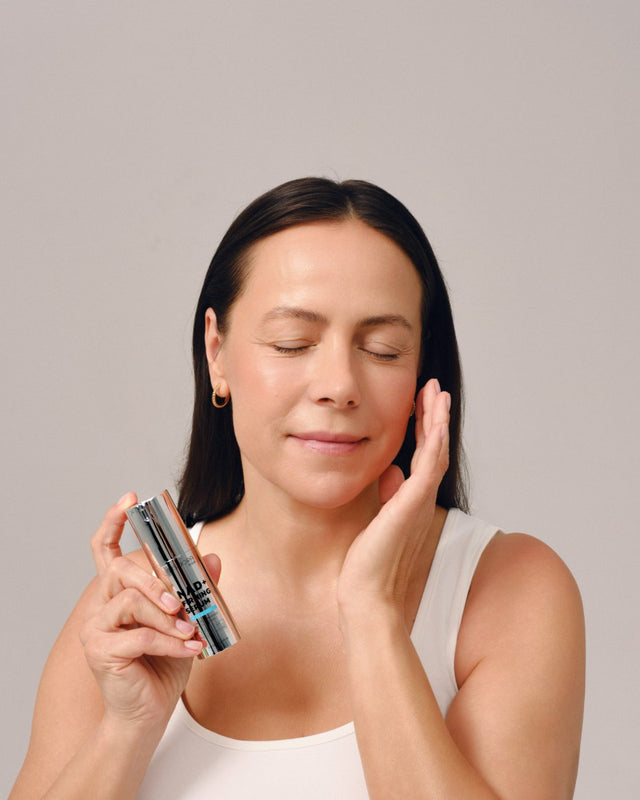
PDRN Exosome EGF Night Renewal Serum
2,000 ppm PDRN with exosomes and EGF, plus 1.5% panthenol in a ceramide and cholesterol base. Used every evening after retinal, it helps skin look smoother, bouncier and more rested.
Shop PDRN serum07Winter habits that help more than another serum
No serum can keep up with a routine that strips skin twice a day. These habits come straight from dermatologists' advice for dry skin.7
- Keep showers short and warmFive to ten minutes with warm, not hot, water. Close the bathroom door to keep the steam in.7
- Pat, do not rubGently pat skin dry with a towel and leave it a little damp.7
- Moisturize within minutesApply moisturizer while skin is still damp after bathing or washing your face.7
- Choose a cream over a lotionCreams and ointments add more moisture than lotions.7
- Run a humidifier at nightA portable humidifier in the bedroom helps, as long as you clean it regularly.78
Want everything in one box? The Skin Recharge Set covers the full morning and evening routine, with Ceramide+ as the final seal at both ends of the day.


Key takeaways
- Skin gets drier after menopause as estrogen falls.1
- Barrier lipids, especially ceramides, decline with age and drop further in winter.2
- Hyaluronic acid improves hydration and elasticity, but it does not repair the barrier.4
- On its own in dry air, a humectant can draw water up and lose it, so seal it with a cream.5
- For aged skin, barrier creams with cholesterol alongside ceramides worked best in research.6
- Order: damp skin, hyaluronic acid, treatment serum, ceramide moisturizer.
FAQ
Is hyaluronic acid good for skin after 50?
Yes, as long as you seal it in. In a 60-day study of women aged 30 to 60, hyaluronic acid creams improved hydration and elasticity, and the smallest molecule sizes also softened the look of wrinkles.4
Are ceramides better than hyaluronic acid for menopausal skin?
For dry, flaky or easily irritated skin, ceramides usually matter more, because they rebuild the lipid barrier that thins with age.2 Hyaluronic acid adds water but cannot hold it there. Most mature skin does best with both.
Should I put hyaluronic acid on wet or dry skin?
On damp skin, followed by a moisturizer. Dermatologists recommend moisturizing while skin is still damp, and occlusive ingredients work best on dampened skin.57
Can I use hyaluronic acid with retinal?
Yes. Apply retinal to dry skin first, let it absorb, then add hyaluronic acid if your skin feels dry, and finish with moisturizer. If you are new to retinoids, read our guide to retinol irritation after menopause.
Why does my skin feel tight even after moisturizing?
Usually because the cleanser is stripping lipids, the moisturizer is too light, or the air is very dry. Try a gentle cleanser, a cream instead of a lotion, and a humidifier at night.7
How long before dry skin feels better?
Comfort often improves within days of switching to a gentler routine. Flaking and rough texture take longer, because older skin repairs its barrier more slowly.9 If dryness comes with intense itching, cracking or a rash, see a dermatologist.
References
- Thornton MJ. Estrogens and aging skin. Dermato-Endocrinology. 2013;5(2):264–270.
- Rogers J, Harding C, Mayo A, Banks J, Rawlings A. Stratum corneum lipids: the effect of ageing and the seasons. Archives of Dermatological Research. 1996;288(12):765–770.
- Papakonstantinou E, Roth M, Karakiulakis G. Hyaluronic acid: a key molecule in skin aging. Dermato-Endocrinology. 2012;4(3):253–258.
- Pavicic T, Gauglitz GG, Lersch P, et al. Efficacy of cream-based novel formulations of hyaluronic acid of different molecular weights in anti-wrinkle treatment. Journal of Drugs in Dermatology. 2011;10(9):990–1000.
- Purnamawati S, Indrastuti N, Danarti R, Saefudin T. The role of moisturizers in addressing various kinds of dermatitis: a review. Clinical Medicine & Research. 2017;15(3-4):75–87.
- Zettersten EM, Ghadially R, Feingold KR, Crumrine D, Elias PM. Optimal ratios of topical stratum corneum lipids improve barrier recovery in chronologically aged skin. Journal of the American Academy of Dermatology. 1997;37(3 Pt 1):403–408.
- American Academy of Dermatology. Dermatologists' top tips for relieving dry skin.
- U.S. Environmental Protection Agency. A brief guide to mold, moisture and your home.
- Ghadially R, Brown BE, Sequeira-Martin SM, Feingold KR, Elias PM. The aged epidermal permeability barrier. Journal of Clinical Investigation. 1995;95(5):2281–2290.
Written by MISOORA Editorial. This article is for general information and is not medical advice. Skincare results described are cosmetic and vary from person to person. If you have concerns about changes in your skin, talk to your doctor or a board-certified dermatologist.